Why jumping returns
The combat designers explicitly identify the addition of jump as part of bringing selected Greek-era movement ideas into the modern series’ close combat. The result is built around Faye’s agility: the transition between ground and air is intended to keep actions responsive and let an encounter continue across changes in height.
Defense through mobility
Jumping can carry Faye over enemy attacks. Designers also explain that some more dangerous threats require the increased mobility to deal with them. This establishes movement as a defensive option as well as a way of reaching an airborne target. It does not mean that every attack can be avoided with the same jump timing.
The demonstrated three-character sequence
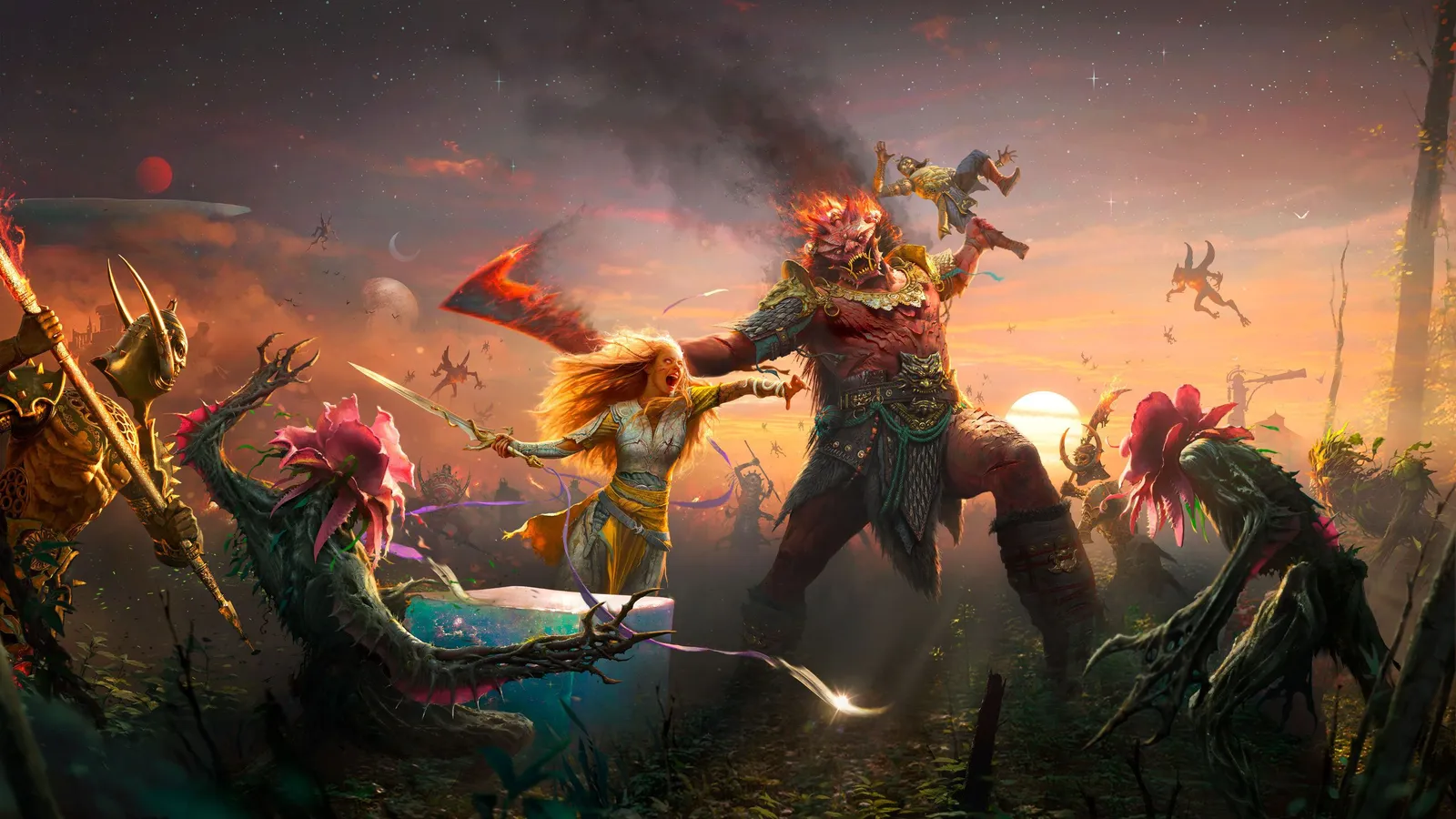
- Faye kicks an enemy toward Phranque.
- Phranque rebounds the target upward.
- Faye jumps and air dashes toward the airborne enemy.
- She attacks with the sword.
- Rue’s ribbons pull the target in for a finishing sequence.
This is a developer-described example of how the systems interact. It demonstrates a possible chain, without publishing the complete control scheme, skill costs, timing windows or every condition needed to execute it in the finished game.
Bow connections
The Serpent Bow’s full-aim volley can capitalize on Phranque’s launch, while half-aim shooting is described as a way to juggle enemies and extend combinations. Aerial control therefore belongs to multiple parts of the loadout, not only sword attacks.
A different balance of familiar series elements
Lawrence describes borrowing movement and fluidity from the Greek games while keeping the Norse games’ closer combat and emphasis on companions. Those choices are intended to fit Faye’s character and her tendency to improvise. The resulting design direction explains why jumping returns alongside coordinated companion actions, rather than indicating that Laufey reproduces an earlier game’s complete moveset or control scheme.